|
|
Why a small business can be ahead of a big one with AI. Plus a free
30-minute check.
|
|
|
|
|
|
I have spent most of my working life inside big companies. I still
spend much of my year there, coaching leaders and giving keynotes
on AI and leadership.
|
|
|
|
|
Then I go home and run a business with no IT department and no
marketing team.
For a long time I thought that is the tougher life. I changed my
mind lately, and I want to tell you why.
Time to read: 7 minutes
In this edition:
1. The Small Business Head Start
2. Client story on AI
3. One Last Thing: Back at the University of Zurich
|
|
|
|
The Small Business Head Start
|
|
|
|
|
Inside a big company, AI arrives with a budget, licences, an IT
team and a rollout plan. And a numbers of steps to get things
approved beforehand.
And still, often it happens that people do not feel that AI is
theirs, it's for them.
Nobody has shown them what it does for their own Tuesday morning.
And by the time a tool decision has been through security, legal
and three steering meetings, half a year is gone.
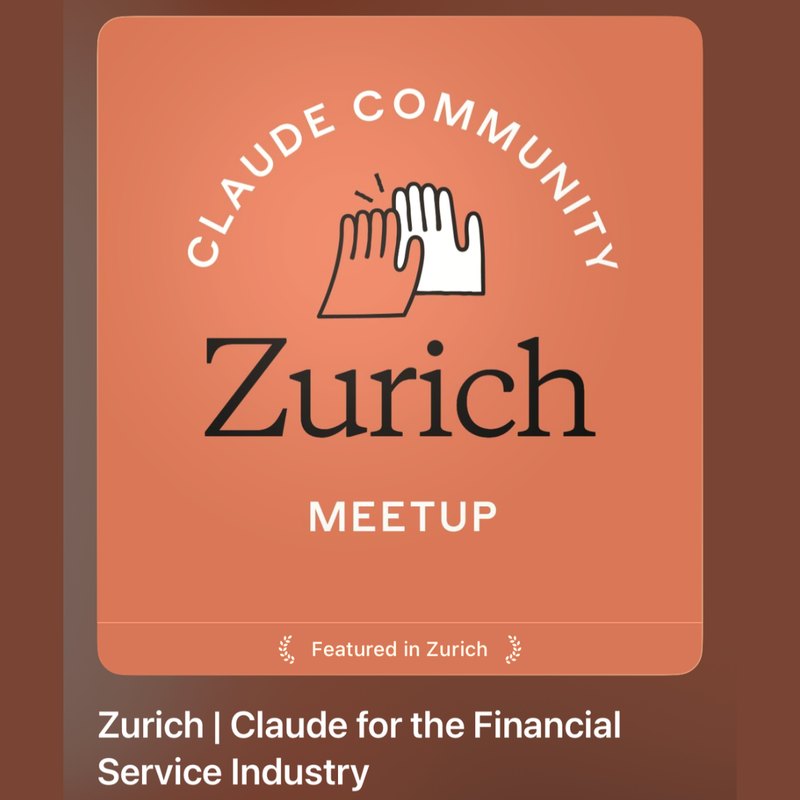
This is why I keep going to the Claude meetups
in Zürich. Four since July, and the room gets fuller every
time. Two weeks ago at Adnovum I heard the same story again from
people inside banks and insurers: the demo worked, the board
approved, and months later the same person was still copying the
report by hand.
|
|
|
|
|
I go there for the user stories more than for the demos. (Btw if
you are not from Zürich, go on Luma and look for Claude meetups in
your city.)
Now look at a small business owner. None of that is in the way.
You decide. You can pick a tool on Monday and have it running by
Wednesday. You feel the result on your own desk, in your own week.
And you just got a new colleague, or three.
I know this as a founder. I run The Change Republic
without an IT department or a marketing team. One of
my AI workers
takes care of my website so that AI assistants recommend me.
Another collects my receipts for the bookkeeping. Nobody had to
approve either of them.
This is the bit I had not seen before. I came from large
corporates, I work with large corporates, and I had never seen how
much easier the start is for the small ones. The small business has
really a big head start.
I wish more owners would use it. Getting started is easy, and the
first pain points are the same in almost every small business I
look at.
|
|
|
|
|
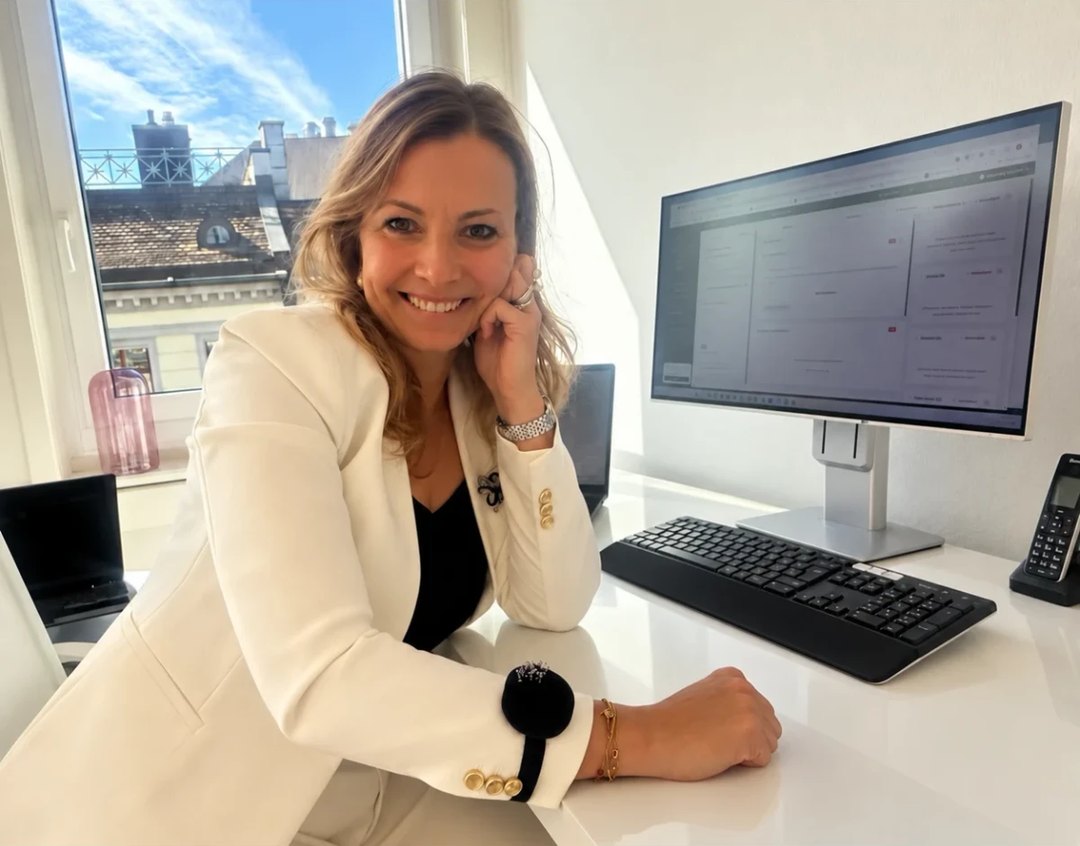
A few weeks ago I sat at the laptop of a small business owner who
has run her business for 25 years. Twenty-five years, a fantastic
business with real history.
And once again, I hear the same sentence what a lot of business
owners say: "I have been to AI events, but nobody translated any of
it into my business. I don't know how I can make use of it."
So that is what I do now. I sit down with the owner, at their own
laptop, and we look at three things first.
|
|
|
|
|
Being found. Ask an AI assistant for [your kind of business] in
[your city]. It names a dozen. Most small businesses are never one
of them.
The customer list. There are usually three: the accounting
software, a spreadsheet, and a sign-up form on the website that has
been collecting addresses for years. Nobody has ever written to
those people.
The small jobs that go to other people or never get done: the
social media posts, the newsletter, the receipts for the
bookkeeper.
Most small businesses look like this before anyone sits down with
the owner and the tools for an afternoon. That is normal.
By the end of such an afternoon there is an assistant on the
owner's own laptop, connected to their mail and their files, and
the first social media posts are drafted from material they already
own. The owner decides at the table. It is running before I leave.
|
|
|
|
|
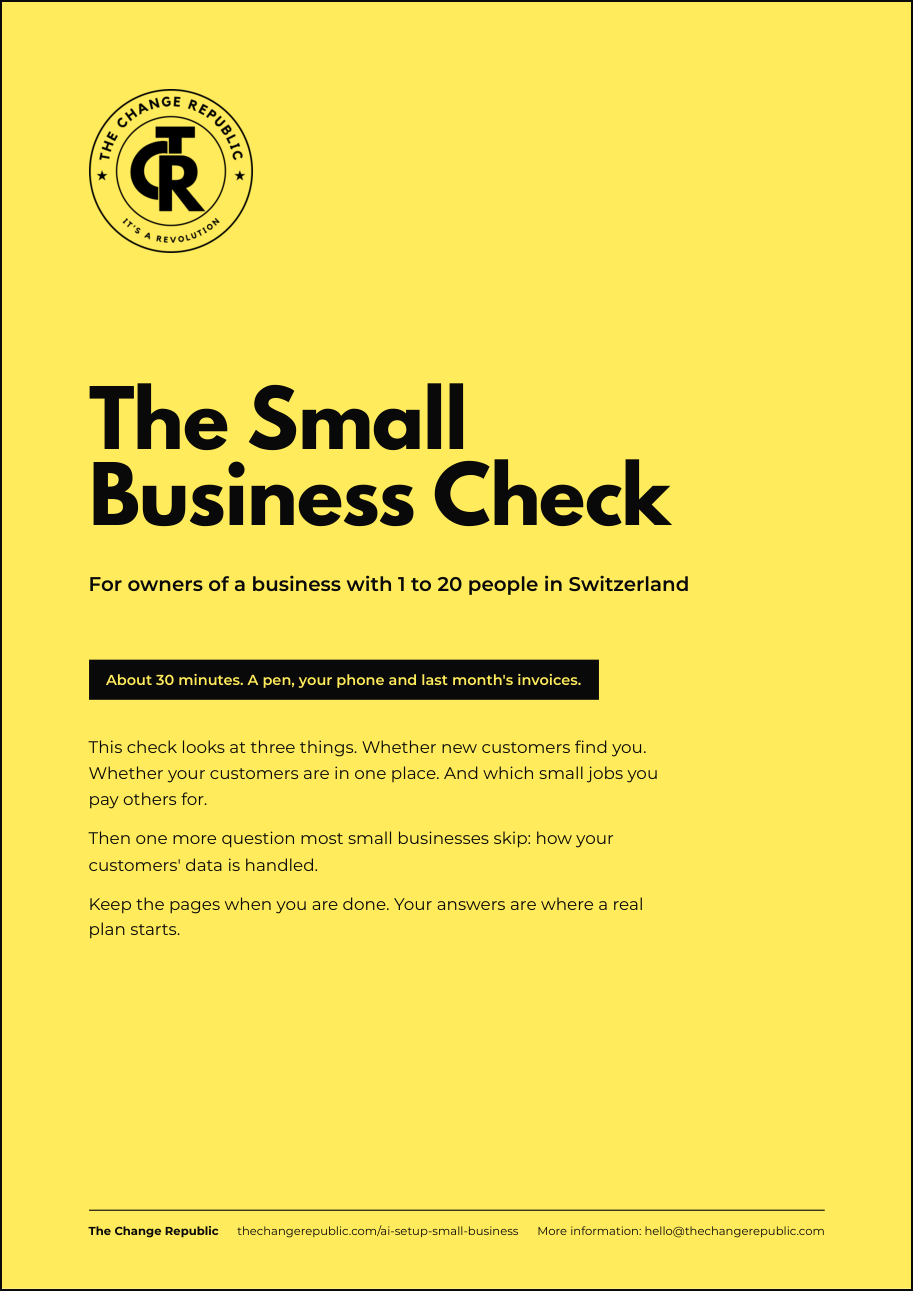
I wrote the three down, with the tests that go with them. The Small
Business Check: twelve statements and three tests you can do
yourself, about 30 minutes, in English or German.
|
|
|
|
|
If you work in a large company, you still know an owner. Your
hairdresser, your accountant, the friend who went independent and
does consulting since last year. Forward them this edition.
And if you run a business and want it set up with you, at your
place, on your own systems, this is the work I now do
with small business owners in Switzerland.
|
|
|
|
One Last Thing: Back at the University of Zurich
|
|
|
|
|
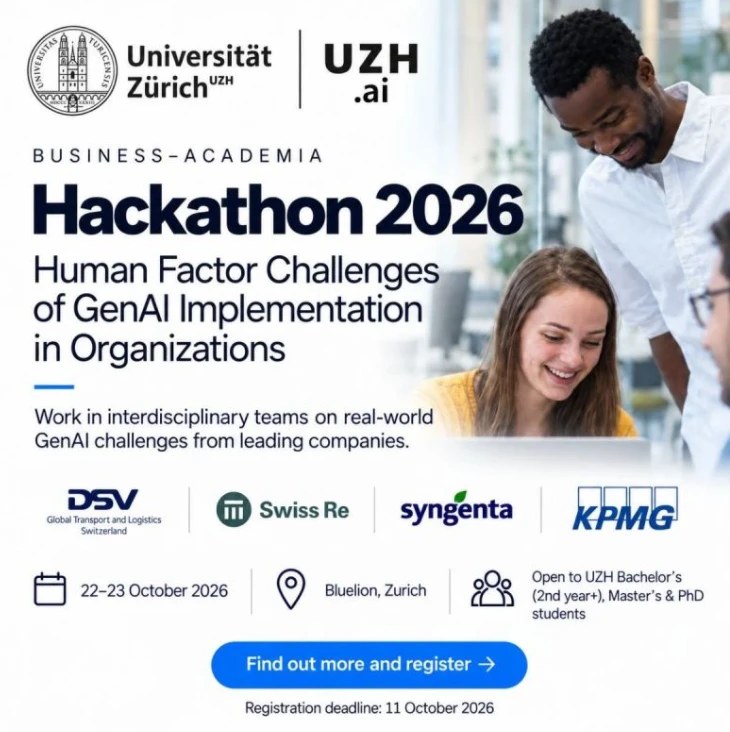
On 22 October I go back to the University of Zurich. Fourteen years
ago I studied finance there, while I was expecting my son.
I wrote on
LinkedIn why this one is personal.
This time I am there for the first UZH.ai Business-Academia
Hackathon. The theme is the human side of bringing generative AI
into organisations. It is the same story I keep hearing at the
Claude meetups.
DSV, Swiss Re, Syngenta and KPMG bring real cases from their own
companies. Student teams from every discipline spend two days on
them at Bluelion Zürich. Nobody needs to code.
Prof. Dr. Lauren Howe opens with the research. I follow with what I
see inside companies, and how people keep control as AI takes on
more of their work.
Bachelor students from their second year, Master's and PhD students
can register until Sunday, 11 October. If there is a UZH student in
your life, forward them this.
|
|
|
|
|
There is probably one small job on your desk this week that an
assistant could take.
Which one would you hand over first? Hit reply and tell me, I read
every answer.
|
|
|
|
|
P.S. The check exists in German too. For the owner in your life who
does not read English newsletters.
|
|
|
|
|
How can we work together?
|
|
|
|
|
Did you miss our last newsletters?
Inboxes can get a little crazy, right? Just in case you missed
them, here are the links to
our previous newsletters:
|
|
|
|
The Change Republic
Rötibodenstrasse 34, Wädenswil
Switzerland
|
|
You received this email because you signed up on our website
or made a purchase from us.
|
|
|
|
|
|

|
|
|